
Delaying Tooth Replacement: What Happens When a Gap Is Left?
A missing tooth can let teeth drift and bone change over time. Learn why timing matters and which replacement options an exam can open up.
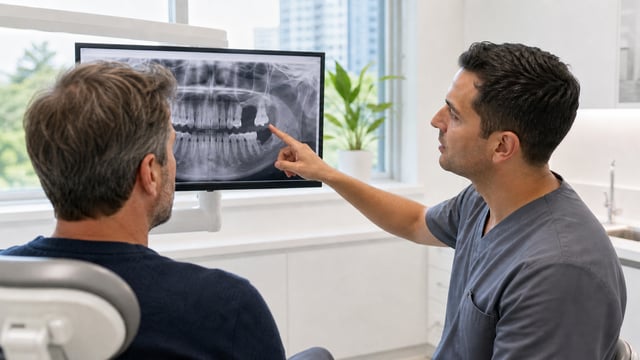
Delaying tooth replacement can change more than your smile. A gap can affect chewing, speech and facial support, nearby teeth may drift, and the jawbone where a tooth is missing can change over time. At North Toronto Dental Centre in North York, an exam and imaging show which options still suit you.
Why the Gap Matters
- A missing tooth affects the whole bite. Chewing, speech and facial support can all change
- Teeth and bone can shift over time. Neighbouring teeth may drift, and the bone where a root used to be can shrink
- Waiting can narrow your choices. Some options, like dental implants, need enough jawbone support
- There is more than one answer. Dentures, bridges, implants, implant-supported dentures and All-on-4 are all assessed case by case
- An exam is the first step. A clinical exam and imaging show what is possible for your mouth today
Losing a tooth is common, and many people put off replacing it, especially when the gap is at the back where nobody sees it. Patients in North York and around Avenue Road often tell us the gap "does not bother them yet."
This guide explains what can happen when a gap is left, why timing matters for your options, and how to decide on the next step without pressure.
What Happens When You Delay Tooth Replacement?
Your teeth work as a team. Each one helps hold its neighbours in place and shares the work of chewing. When one is missing, that balance changes, slowly and often without pain.
Here is what delaying tooth replacement can lead to over time:
- Drifting teeth: the teeth beside a gap can tilt or drift into the space
- A changing bite: the tooth above or below the gap has nothing to meet and may shift
- Harder cleaning: tilted teeth and new spaces can trap food and plaque, which raises the risk of decay and gum problems
- Extra load on other teeth: you may start chewing on one side, which puts more pressure on the remaining teeth
- Bone changes: without a tooth root, the jawbone in that area can shrink
None of this happens overnight, and not everyone experiences every change. That is exactly why it is worth having the gap checked early rather than waiting for a problem.
Why Replacing a Missing Tooth Matters for Everyday Life
Chewing
Missing back teeth make it harder to chew firm foods well. Many people quietly switch to softer foods or chew only on one side. Replacing missing teeth helps restore chewing, whether that is with dentures, a bridge or a dental implant.
Speech and Facial Support
Front teeth help shape certain sounds, so a gap can change how some words sound. When several teeth are missing, the lips and cheeks can lose some support. Dentures, for example, help restore chewing, speech and facial support for patients missing multiple or all teeth.
Confidence and Stability
A visible gap can make people smile less in photos or at work. Options that are fixed in place, like implants, are designed to restore chewing, appearance and stability.
Does Delaying Tooth Replacement Affect Your Options?
It can. This is the part most people do not expect.
A dental implant replaces the root of a missing tooth, so it needs enough bone to hold it. At our clinic, implants are recommended for patients with sufficient jawbone support, and suitability is assessed through a clinical exam and imaging.
When a tooth has been missing for a while, the bone in that area may no longer be tall or wide enough. The Canadian Dental Association explains that if your jawbone has shrunk, you may be able to have a bone graft to build it back up, and that your dentist will tell you if bone grafting can be done.
In the upper back jaw, bone loss after tooth loss can also bring the sinus closer to where an implant would go. In those cases, a sinus lift in North York may be considered to add bone before an implant can be placed. That adds healing time before the tooth itself is replaced.
The takeaway is simple: the longer a gap is left, the more planning a replacement may need. An early exam keeps more doors open.
Tooth Replacement Options at a Glance
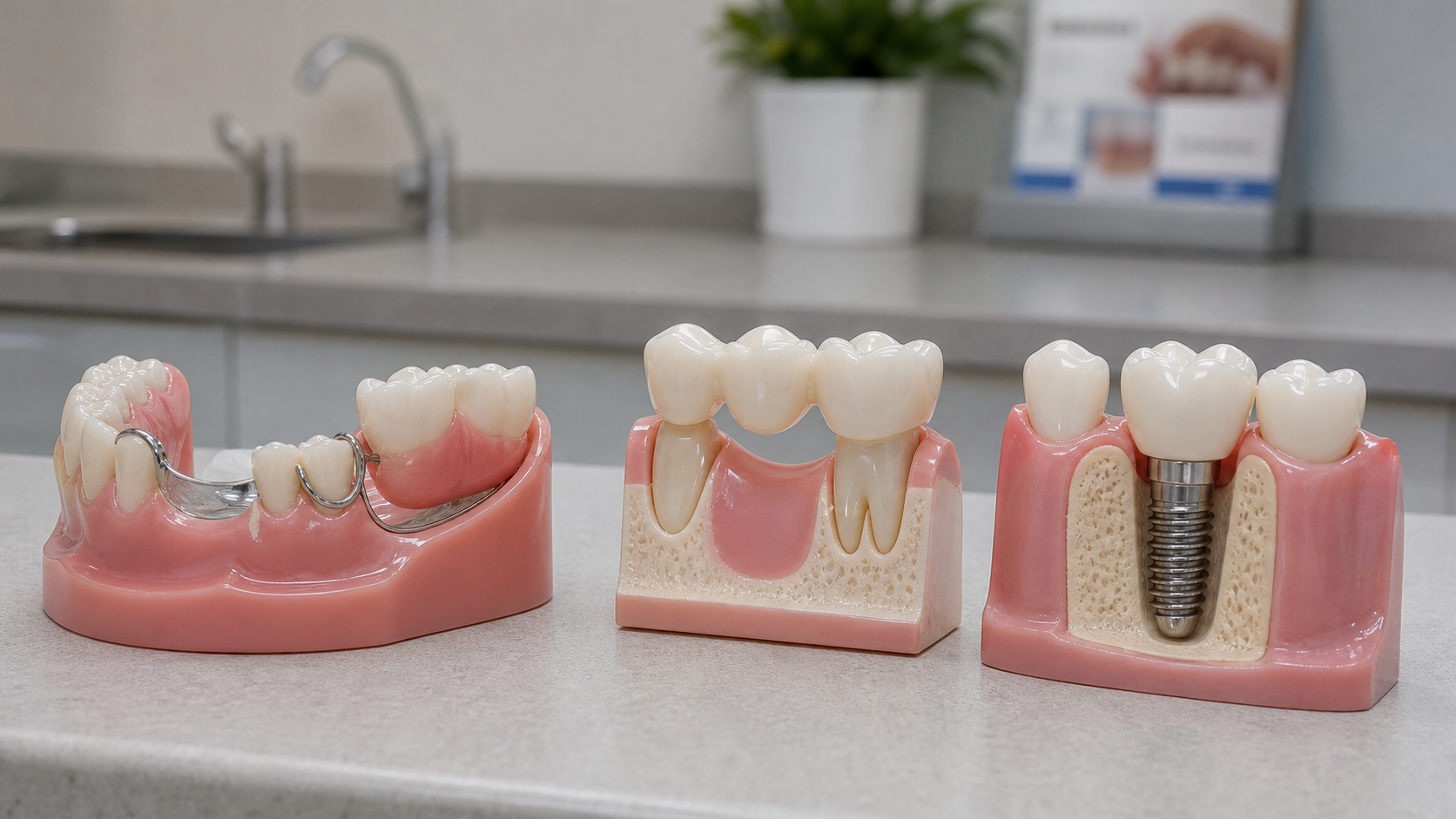
There is no single best way to replace a missing tooth. The right choice depends on how many teeth are missing, your bone health, comfort, lifestyle, cost and goals. Here are the tooth replacement options we assess, each explained in full on its own page:
| Option | Usually considered when | Learn more |
|---|---|---|
| Partial or full dentures | Several or all teeth are missing; a removable option is preferred | dentures in North York |
| Dental bridge | One or more teeth are missing and an implant is not chosen | crowns and bridges in North York |
| Dental implant | One or more teeth are missing and there is enough jawbone support | dental implants in North York |
| Implant-supported (snap-on) dentures | A denture needs more stability | dentures in North York |
| All-on-4 dental implants | Most or all teeth are missing and fixed teeth are wanted | All-on-4 dental implants in North York |
Partial dentures help preserve your remaining natural teeth, and full dentures replace all teeth in an upper or lower arch. Bridges are discussed when teeth are missing and implants are not chosen. All-on-4 is a fixed, non-removable alternative to dentures, designed to reduce the need for extensive bone grafting, though it is not suitable for every patient.
How Dental Implants Replace Missing Teeth
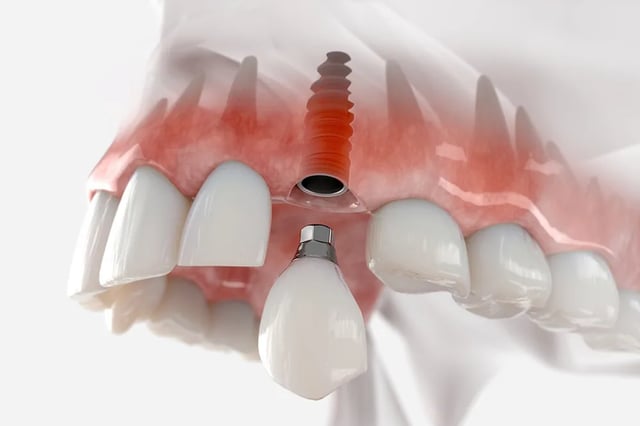
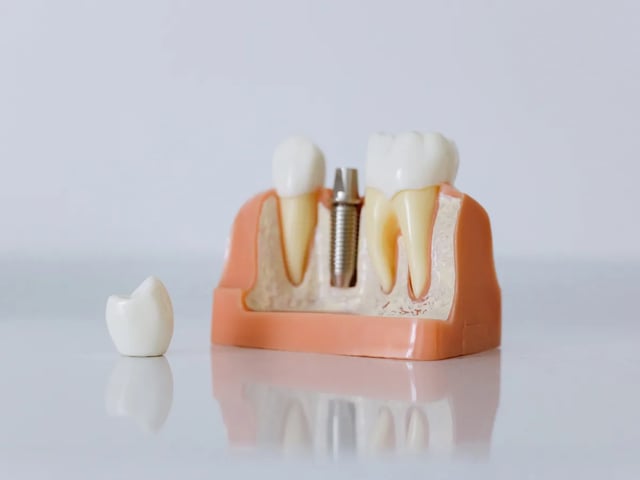
People searching for dental implants missing teeth information usually want to know how an implant actually holds a tooth in place. An implant is a titanium post placed in the jawbone. Over a healing period, the bone grows tightly around it, which is what makes it stable enough to support a crown, a bridge or a denture.
If you are curious about the science, our guide on how dental implants fuse with your jaw bone walks through that healing process, and why titanium works best explains why titanium is the material used.
At North Toronto Dental Centre, implant treatment is typically completed in stages, implant placement is done under local numbing or sedation, and healing and integration time is explained clearly before you start.
When Is the Right Time to Replace a Missing Tooth?
There is no single deadline, but sooner is usually simpler. A good time to book an exam is when:
- A tooth has just been removed, or is about to be
- You notice teeth beside a gap starting to tilt or food getting trapped
- Chewing on one side has become a habit
- A denture or bridge you already have no longer feels right
- You have been told in the past that you may not have enough bone for an implant
If a tooth needs to come out, dentures may be placed after the extraction once healing allows, and your replacement can be planned before or soon after the tooth is removed. Learn more about tooth extraction in North York.
How a Dentist Helps You Replace Missing Teeth
Choosing how to replace missing teeth is a shared decision. At your visit, our team looks at:
- How many teeth are missing, and where
- The health of your remaining teeth and gums
- Your jawbone support, using imaging when needed
- Your comfort, lifestyle and budget
- Your long-term expectations, explained clearly before any decision
Cost, comfort, bone health and lifestyle are all considered, and the decision is guided by your goals and clinical factors. Insurance coverage is reviewed when applicable, and costs are explained before treatment. For full arch treatment, financing or phased treatment is discussed when available.
FAQs About Delaying Tooth Replacement
Over time, the teeth beside the gap can drift or tilt, the opposite tooth can shift, and the bone where the root used to be can shrink. Chewing and cleaning can also become harder. Not everyone has every change, so an exam shows what is happening in your own mouth.
Ready to Talk About Your Missing Tooth?
Still unsure whether your gap needs attention now or can wait? A short exam gives you a clear answer based on your own teeth and bone.
- Every option explained: dentures, bridges, implants, implant-supported dentures and All-on-4, assessed case by case
- Imaging when needed: jawbone support is checked before any implant decision
- Clear planning: costs, insurance and long-term expectations are explained before treatment
Book a dental exam in North York, or call North Toronto Dental Centre, we are at 1942 Avenue Rd, North York.
Keep reading.
Book the visit your future smile will thank you for.
New patients welcome. Same-week appointments are usually available.


