
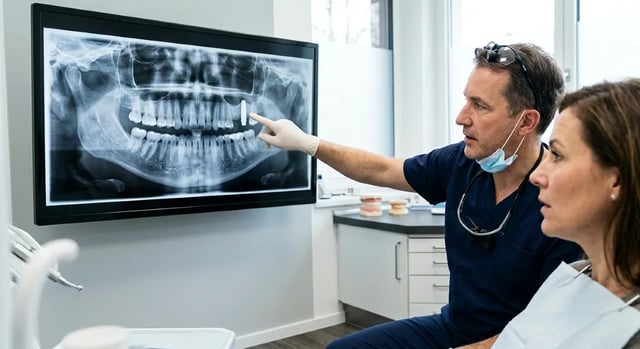
A sinus lift, also called sinus augmentation, is a surgical procedure that increases bone height in the upper jaw to create enough bone volume for dental implant placement. It may be recommended when natural bone height is inadequate, bone has been lost after tooth loss, or the sinus sits too close to the upper jawbone.
What Patients Should Know About Sinus Lifting
- Bone Foundation: A sinus lift increases bone height in the upper jaw.
- Implant Preparation: It may be used to create enough bone volume for dental implant placement.
- Candidate Profile: Candidates may include patients with insufficient upper jaw bone height, bone loss after tooth loss, or sinuses positioned too close to the jawbone.
- Clinical Suitability: Suitability is determined through clinical examination and imaging.
- Surgical Approach: The procedure involves lifting the sinus membrane and placing bone graft material beneath it.
- 3D Planning: CBCT scans may be used for planning.
- Guided Healing: Healing is monitored through follow-up exams and imaging.
- Success Criteria: Success is evaluated based on bone stability and volume.
- Transparent Cost: Cost depends on graft materials and surgical approach, with coverage reviewed when applicable.
When preparing to restore your smile with missing teeth, establishing a strong foundation is an essential first step. For many patients, a sinus lift in North York is required to safely support long-lasting restorative care. At North Toronto Dental Centre, our clinical team focuses on detailed assessment, precision planning, and patient comfort to ensure your upper jaw is ready for future implant placement.
What Is a Sinus Lift?
A sinus lift, also known as sinus augmentation, is a surgical procedure that increases bone height in the upper jaw by lifting the sinus membrane and adding bone beneath it.
It is used to create enough bone volume for dental implant placement when natural bone height is inadequate. Many patients do not naturally have enough bone density in the back of their upper jaw to anchor an implant securely. By performing a dental sinus lift, we can safely rebuild this foundation.
Why Might a Sinus Lift Be Needed Before Dental Implants?
A sinus lift may be needed when there is not enough bone height in the upper posterior jaw, when bone has been lost after tooth loss, or when the sinuses are positioned too close to the upper jawbone.
Patients searching for a sinus lift for dental implants often wonder why their implants cannot simply be placed right away. Implants require a certain amount of healthy bone to remain stable.
Insufficient Bone Height in the Upper Jaw
Adequate bone volume is needed for proper implant planning. An upper jaw bone graft during a sinus lift addresses cases where the natural bone is simply too thin to support the implant post safely.
Bone Loss After Tooth Loss
When a tooth is extracted or falls out, the jawbone in that area no longer receives stimulation from chewing, causing the bone to shrink over time. Individuals who have experienced bone loss after tooth loss may be candidates for this procedure.
Sinus Position Too Close to the Jawbone
In some patients, the sinus cavity naturally sits very low. Suitability for a sinus lift for implant placement depends on your unique anatomy and imaging results to ensure the sinus cavity is safely supported.
Who Is a Candidate for Sinus Lifting?
Candidates may include patients with insufficient bone height in the upper posterior jaw, patients who have experienced bone loss after tooth loss, or patients whose sinuses sit too close to the upper jawbone.
If you are considering Dental Implants, suitability for sinus lifting North York is not assumed for every patient. It is determined exclusively through a comprehensive clinical examination and imaging.
What Happens During a Sinus Lift Procedure?
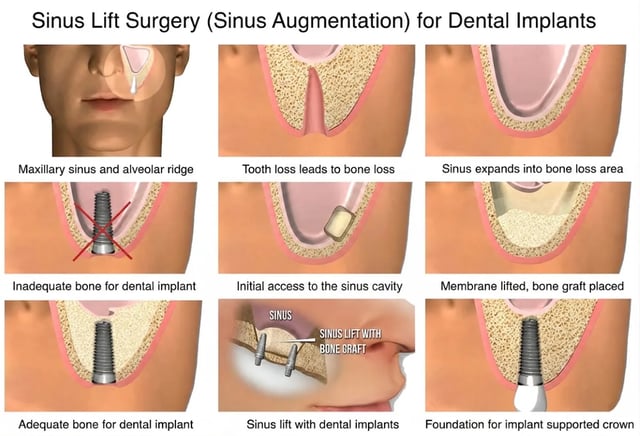
A sinus lift may involve accessing the sinus area through the upper jawbone, carefully lifting the sinus membrane, placing bone graft material beneath the sinus, and allowing time for the graft to integrate with existing bone.
If you are scheduled for a sinus lift procedure, understanding the steps can help reduce anxiety. Our clinical approach generally involves:
- Clinical examination and imaging are completed: Suitability is determined through careful examination and imaging before any treatment begins.
- The sinus area is accessed through the upper jawbone: The procedure involves reaching the specific area where bone height needs to be increased.
- The sinus membrane is carefully lifted: This delicate step creates space for the necessary bone graft material.
- Bone graft material is placed beneath the sinus: The graft supports the overall goal of increasing bone volume.
- The graft is allowed time to integrate: Healing and integration are monitored strictly through follow-up exams and imaging.
What Materials and Technology Are Used for Sinus Lifting?
Sinus lifting may involve bone graft materials, CBCT scans for planning, precision surgical instruments, sterile and biocompatible materials, and techniques selected based on anatomy and treatment goals.
To ensure your sinus lift surgery is as safe and effective as possible, we utilize advanced planning and materials. This may include natural, synthetic, or combination bone graft materials. A CBCT scan for sinus lift planning allows us to view your jaw and sinus structure in 3D. We only use precision surgical instruments for membrane elevation and sterile, biocompatible materials for your procedure.
What Is Recovery Like After a Sinus Lift?
A healing period is required before implant placement. Bone integration is monitored through follow-up exams and imaging, and post-operative instructions are provided to support recovery.
Understanding your sinus lift recovery time is an important part of treatment planning. Because every patient’s body heals at its own pace, timelines vary depending on your individual healing response. You will be provided with detailed post-operative instructions to support your healing, and we will monitor your progress during follow-up visits to evaluate your bone integration.
Can You Fly After a Sinus Lift?
Because changes in cabin air pressure can affect your sinuses during the early stages of healing, it is highly recommended to discuss any upcoming travel plans with your dentist. Patients must strictly follow the customized post-operative guidance provided by our clinical team, as clearance to fly depends heavily on the specific surgical approach and your individual healing response.
How Is Sinus Lift Success Evaluated?
Sinus lift success is evaluated by monitoring bone integration through follow-up exams and imaging, and by assessing bone stability and volume.
Before moving forward with Dental Implants North York, we must confirm that your new bone foundation is solid. Bone integration is monitored carefully through follow-up exams and imaging. Success is evaluated entirely based on the bone stability and volume achieved during the healing phase.
How Much Does a Sinus Lift Cost?
Sinus lift cost depends on factors such as bone graft materials and the surgical approach. Insurance coverage may vary depending on the patient’s plan and medical necessity, and coverage and benefits are reviewed before treatment when applicable.
If you are researching a bone graft for dental implant or sinus lift, it is important to know that pricing is customized to your needs. Costs depend on the bone graft materials used and the required surgical approach. Coverage and benefits are always reviewed before treatment when applicable so you understand your investment in long-term implant success.
How Does Sinus Lifting Fit Into Dental Implant Treatment?
Sinus lifting helps create sufficient bone volume for dental implant placement when natural bone height in the upper jaw is inadequate. Implant planning depends on clinical examination, imaging, bone stability, and healing response.
A sinus augmentation North York procedure is often the crucial first step toward restoring your smile. A healing period is required before your implant placement can begin. Once bone integration is verified through exams and imaging, we can proceed with confidence to place your implants and eventually attach Crowns and Bridges or Dentures.
Sinus Lift vs Dental Implant Placement
| Topic | Sinus Lift | Dental Implant Placement |
|---|---|---|
| Main purpose | Increases bone height in the upper jaw | Replaces one or more missing teeth with an implant-based option |
| When considered | When natural bone height is inadequate | When a patient has sufficient jawbone support |
| Planning | Clinical exam and imaging determine suitability | Suitability assessed through clinical exam and imaging |
| Materials | Bone graft materials may be used | Titanium implant used for tooth replacement |
| Healing | Bone graft integration must be monitored | Healing and integration time explained clearly |
| Follow-up | Bone stability and volume are evaluated | Implant health is monitored over time |
FAQs About Sinus Lifting
A sinus lift, also called sinus augmentation, is a surgical procedure that increases bone height in the upper jaw. It creates sufficient bone volume for dental implant placement when natural bone height is inadequate.