
Dental Implants: Why Titanium Works Best
Why are titanium dental implants the gold standard? Explore Grade 4 titanium, SLA and anodized surface treatments, biocompatibility testing, corrosion resistance, and how titanium compares to zirconia at North Toronto Dental Centre.
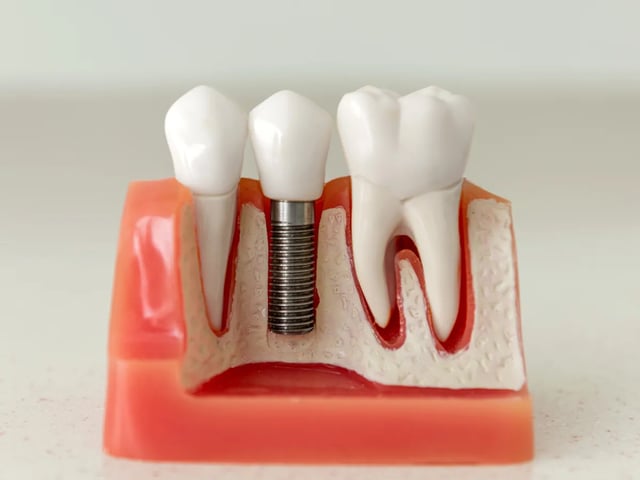
Why are titanium dental implants the gold standard? Explore Grade 4 titanium, SLA and anodized surface treatments, biocompatibility testing, corrosion resistance, and how titanium compares to zirconia at North Toronto Dental Centre.
Why Dental Implants Use Grade 4 Titanium
Grade 4 titanium represents the most commonly used material for dental implants. This choice stems from its exceptional biocompatibility and mechanical properties. This commercially pure titanium contains minimal impurities, ensuring optimal tissue response.
- Excellent corrosion resistance in biological environments
- High strength-to-weight ratio for optimal load distribution
- Low elastic modulus that closely matches bone tissue
- Non-magnetic properties compatible with medical imaging
- Proven biocompatibility with minimal inflammatory response
Clinical studies demonstrate that Grade 4 titanium dental implants achieve success rates exceeding 95% over 10-year periods. This exceptional performance stems from titanium's unique ability to form direct bone contact.
Surface Treatment Technologies for Dental Implants
Modern dental implants undergo specialized surface treatments that enhance osseointegration. These technologies create optimal conditions for bone cell attachment around the implant surface.
SLA (Sandblasted, Large-grit, Acid-etched) Surface Treatment:
- Creates micro-rough surface texture with 1–3 micrometer features
- Increases surface area available for bone contact by 300–600%
- Accelerates initial bone formation during first 2–4 weeks
- Provides mechanical interlocking between bone and implant
- Demonstrates superior osseointegration compared to smooth surfaces
Research shows that SLA-treated dental implants achieve faster integration compared to machined surfaces. This enhanced surface promotes stronger bone attachment and improved healing.
Anodization Technology in Dental Implants
Anodization represents another advanced surface treatment that enhances dental implant performance. This electrochemical process creates a controlled oxide layer on the titanium surface, improving both biological and mechanical properties.
The anodization process increases the natural titanium oxide layer thickness significantly. This enhanced oxide layer provides superior corrosion protection and creates favorable conditions for protein adsorption and cell attachment.
Clinical studies indicate that anodized dental implants demonstrate improved early healing responses and enhanced long-term stability compared to conventional surface treatments.
Biocompatibility Testing for Dental Implants
Rigorous biocompatibility testing ensures that dental implants meet international safety standards. These tests evaluate tissue response, cytotoxicity, and long-term biological effects.
Standard Biocompatibility Tests:
- ISO 10993 biological evaluation protocols
- Cytotoxicity testing using cell culture methods
- Sensitization and irritation testing in animal models
- Implantation studies evaluating tissue response
- Genotoxicity testing for DNA damage assessment
Health Canada and FDA approval processes require comprehensive biocompatibility data. These stringent requirements ensure patient safety and treatment predictability for dental implants.
Corrosion Resistance Properties of Dental Implants
The exceptional corrosion resistance of titanium makes dental implants suitable for long-term placement. Titanium forms a stable, self-healing oxide layer that protects against degradation from saliva, bacteria, and mechanical forces.
Electrochemical studies demonstrate that titanium dental implants maintain stable corrosion potentials. This stability prevents metal ion release that could trigger inflammatory responses.
The passive oxide layer on titanium surfaces reforms immediately if damaged. This self-healing property contributes to the exceptional longevity of dental implants.
Zirconia Dental Implants as Alternatives
Zirconia represents an emerging alternative material for dental implants. These ceramic options appeal particularly to patients seeking metal-free solutions and offer excellent aesthetics and biocompatibility.
- White color provides superior aesthetics in anterior regions
- Excellent biocompatibility with minimal inflammatory response
- High strength and fracture resistance
- Non-conductive properties eliminate galvanic reactions
However, clinical research on zirconia dental implants remains limited compared to titanium. Long-term studies are needed to establish equivalent success rates.
Success Rates: Titanium vs Zirconia Dental Implants
Clinical studies comparing titanium and zirconia dental implants show varying results. Titanium maintains superior long-term documentation and predictability. Systematic reviews indicate that titanium dental implants demonstrate more predictable osseointegration.
Recent research suggests that zirconia dental implants achieve comparable short-term success rates. However, they lack extensive long-term data compared to titanium options.
North Toronto Dental Centre offers comprehensive dental implants services using advanced titanium implant technologies. Contact them at 416-783-4433 or reception@ntdental.ca to learn more about implant materials. The clinic is open Monday through Thursday from 8:00am to 6:00pm. Friday and Saturday hours are 8:00am to 3:00pm (two Saturdays per month).
Understanding the Material Science Behind Dental Implants
Understanding the material science behind dental implants helps patients appreciate the research foundation. This knowledge makes modern implant dentistry successful and predictable.
Written by
North Toronto Dental Centre
North Toronto Dental Centre
Keep reading.
Book the visit your future smile will thank you for.
New patients welcome. Same-week appointments are usually available.